October 21, 2026
Stroke was the fourth-leading cause of death for Wisconsinites in 2024. Each year in Wisconsin, about 11,000 people have a stroke and 2,700 die from a stroke. These numbers help explain the importance of the Paul Coverdell National Acute Stroke Program, or Coverdell. It funds state efforts to improve stroke care and helps participating hospitals strengthen their stroke care systems and education.
In stroke care, time is brain. The longer it takes to treat an acute stroke, the more brain tissue can be lost. That is why so many stroke quality metrics are built around time.
Door-in-door-out time, or DIDO, measures the time between a patient’s arrival at an initial emergency department and their time of departure for a higher-level stroke center (such as a comprehensive stroke center) when more advanced treatment is needed. In Wisconsin’s hub-and-spoke model, the smaller spoke hospitals evaluate and begin treating the acute stroke patient, then transfer them to a larger hub hospital that can provide specialized care, such as a mechanical thrombectomy.
The American Heart Association’s Get With The Guidelines program uses 90 minutes or less as its DIDO measure for confirmed ischemic stroke patients transferred for time-critical therapy.
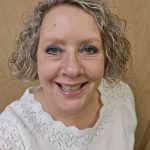
Hollie Landreman, RN, CPAHA, stroke program coordinator at Ascension All Saints Hospital
At Ascension All Saints Hospital in Racine, Wis., stroke program coordinator Hollie Landreman has spent the last 10 of her 33 years at the hospital working to make those minutes count. The relationships she has built with hospital staff, emergency medical services (EMS), and statewide partners have helped her create and refine protocols designed to move stroke patients, when necessary, through the hospital as quickly and safely as possible.
When It Started: Recognizing Stroke Before the DIDO Clock Begins
The DIDO clock officially starts when a patient reaches the hospital, but Landreman’s work starts much earlier. Landreman emphasizes that community awareness is critical to ensuring patients recognize stroke symptoms and seek help quickly. “It starts with educating the community about the signs and symptoms of stroke and the importance of calling 911,” she said.
Through partnerships with the Stroke Collaborative of Wisconsin and the Wisconsin Department of Health Services through Coverdell, educational materials featuring BE FAST Bella help community members recognize stroke signs. At Ascension All Saints, BE FAST placemats adorn the inpatient dining trays during Stroke Awareness Month in May. Pharmacy associates collaborate with the stroke program by tucking a small BE FAST card into each outpatient prescription bag. “You feel so successful with those little things,” Landreman said.
The goal is not just recognition. Landreman wants people to call 911 when they see possible sudden stroke symptoms in themselves or others. Some patients, particularly older adults, tell her they do not want to make a fuss, incur the cost of an ambulance or “be a bother.” Landreman says she would rather have the stroke protocol activated and discover it was unnecessary than lose valuable treatment time.
Call Me Back: Closing the Loop with EMS
Today, Landreman estimates 60% to 70% of All Saints’ stroke patients arrive by ambulance. This gives EMS an important role in shortening what happens after the hospital doors open.
All Saints invested in those relationships by upgrading the EMS radio, creating a dedicated pre-hospital relationship manager role (currently filled by Ryan Wendt), and training EMS crews on processes that can begin before arrival, including drawing labs.
Landreman, Wendt, and sometimes the neuro-interventionalist also bring stroke education directly to the EMS and ambulance service stations. Just as important, Landreman said, is “closing the loop after a case.”
EMS crews can scan a QR code to request follow-up about a patient they transported. The pre-hospital relationship manager can explain what the diagnosis turned out to be, which symptoms pointed toward a stroke, and which suggested a possible stroke mimic. As Coverdell Stroke Program project specialist Dot Bluma put it, “Stroke is hard.” Low blood sugar, migraine, and excessive alcohol intake are among the many conditions that can resemble a stroke.
That feedback can make crews more confident about activating a stroke protocol quickly the next time. Landreman wants EMS to make that call confidently for any patient presenting with abrupt stroke symptoms. There should be no fear of reprimand if the activation turns out not to be a stroke.
Educating and connecting with EMS has measurable value. One large study of transferred stroke patients found EMS prenotification was associated with DIDO times about 20 minutes shorter. When EMS alerts All Saints that a possible stroke patient is coming, the hospital can begin preparing before the patient arrives.
At The Door: What Happens When a Stroke Patient Arrives
A large percentage of stroke patients at All Saints now arrive by ambulance. However, Landreman still wants everyone who might encounter a patient to recognize a stroke.
“Ascension made the conscious decision that stroke is a ‘can’t miss’ diagnosis,” she said. If a patient arrives by private vehicle, the registrar may be the first person to see them and can immediately alert clinical staff. Fortunately, Landreman and colleagues have educated Ascension’s registrars on just that.
Once the stroke protocol is activated, All Saints moves through a deliberately streamlined process:
- The patient meets the appropriate stroke personnel at what Landreman refers to as the “stroke pit stop.”
- If the patient is medically stable, they go directly to imaging. “Rooming them just holds things up,” Landreman said.
- An artificial intelligence program (AI), RapidLVO, can send the computed tomography (CT) image to the neuro-interventionist’s and neurologist’s phones for review—sometimes even before all of the imaging has been completed. Imaging helps the team determine the type of stroke and next treatment steps.
- Patients with an ischemic stroke are then evaluated for the use of thrombolytic medication.
- Ascension Columbia St. Mary’s Hospital, a comprehensive stroke center in Milwaukee. The trip takes 30 to 45 minutes by ambulance and about 14 minutes by helicopter. “Interventions for the large vessel occlusions can only be done at the stroke centers where they have specialized interventional teams to perform mechanical thrombectomy,” Landreman explained.
The End Has No End: Learning After the DIDO Clock Stops
A 2024 case published in Endovascular Today shows what that process can look like when the pieces line up.
A woman in her 70s arrived at Ascension All Saints at 11:53 a.m. with a large-vessel occlusion stroke. CT imaging was completed by 12:06 p.m. At 12:46 p.m., she left All Saints for Columbia St. Mary’s. She arrived there at 1 p.m. and underwent a thrombectomy shortly afterward.
Her DIDO was 53 minutes.
“Stroke care used to be measured in hours,” Landreman said. “Now it’s measured in seconds because we have these tools available.”
The case is one patient, not All Saints’ average. For broader context, Ascension Wisconsin reported a rolling 12-month DIDO average of 99 minutes across its facilities in its 2025 Ministry in Action report, compared with a national median of 174 minutes.
“I feel confident our hospital has a very good process,” said Landreman.
All the time: Why Seconds Matter in Stroke Care
Landreman is not treating a good process as a finished process. She and the hospital’s informatics team are now developing an Epic stroke timer in their electronic health record (EHR). The timer will count up from the patient’s arrival. This will allow staff to see exactly how much time has passed while managing everything else happening during a stroke response.
“It’s helpful to know that time frame exactly instead of trying to figure it out in your head when there is so much else going on,” she said.
For Landreman, the clock is only one part of the story. The shorter DIDO time everyone is working toward depends on people recognizing a stroke, EMS warning the hospital, staff moving a patient directly to imaging, specialists reviewing scans quickly, expediting transport, and the receiving hospital being prepared to take over.
“Stroke is a team sport. It takes all of us to do this,” Landreman said.
She credits Coverdell, the Stroke Collaborative of Wisconsin, the American Heart Association, EMS partners, and the hub-and-spoke hospital system with helping those pieces work together. At All Saints, improving DIDO is less about one dramatic change than shaving minutes from a series of handoffs. When stroke care is measured in seconds, those small improvements can add up to something much bigger for the patient—a better outcome.
Starring…
Hollie Landreman, RN, CPAHA, stroke program coordinator, has been a nurse for 36 years, working at Ascension All Saints Hospital for 33 years. For 25 of those years, she’s worked as a nurse in the intensive care unit (ICU). She’s been the stroke program coordinator for the last 10 years, working a dual role for several years. She also co-leads the Stroke Support Group, held monthly at Ascension All Saints Hospital. Hollie lives in Kenosha with her husband and their pup where she enjoys spending time at the lake and with their adult children and spouses.
Dot Bluma BSN, RN, CPHQ is a Coverdell Stroke Program Project Specialist at MetaStar. She began her nursing career in 1987. During her tenure, she has worked in an intensive care unit (ICU), as a neuroscience quality coordinator, and as a stroke program coordinator. In 2013, Dot began work at MetaStar to help recruit hospitals to the Coverdell Stroke Program. In her work today, she helps hospitals around the state interpret data and use it to make their stroke programs better. She is also the biggest cheerleader for the Coverdell hospitals by ensuring that hospitals and staff receive recognition for their great achievements. She lives in Mukwonago with her husband and two beloved basset hounds.
Kate Schultz has worked as MetaStar’s blog writer for over two years. She had previous careers as a stage manager, as a high school English teacher, and as a software tester. She lives in Madison with her husband and their one cat. When she’s not writing, she’s either playing word games or knitting a project she promised to finish months ago.