February 26, 2026
“We effect positive change in health and healthcare and empower healthcare professionals, community organizations, and healthcare payers to make lasting improvements with a vision of optimal health for all.” This sentence greets visitors to MetaStar’s website. It’s a lofty goal, but one MetaStar takes seriously. They ensure it is at the core of everything they do as a healthcare quality improvement organization.
“MetaStar is dedicated to ensuring the healthiest lives possible,” explained Aimee Rasmussen, Program Manager in Healthcare Transformation at MetaStar. She continued, saying, “MetaStar believes health encompasses physical, mental, and social well-being. All health care should be patient-centered, safe, effective, timely, and equitable.” But how do the employees at MetaStar effect change and make lasting improvements leading to optimal health for all?
Partnering for Better Care
One of the many ways MetaStar fulfills that goal is through their work as a member of the Superior Health Quality Alliance (Superior Health), a Quality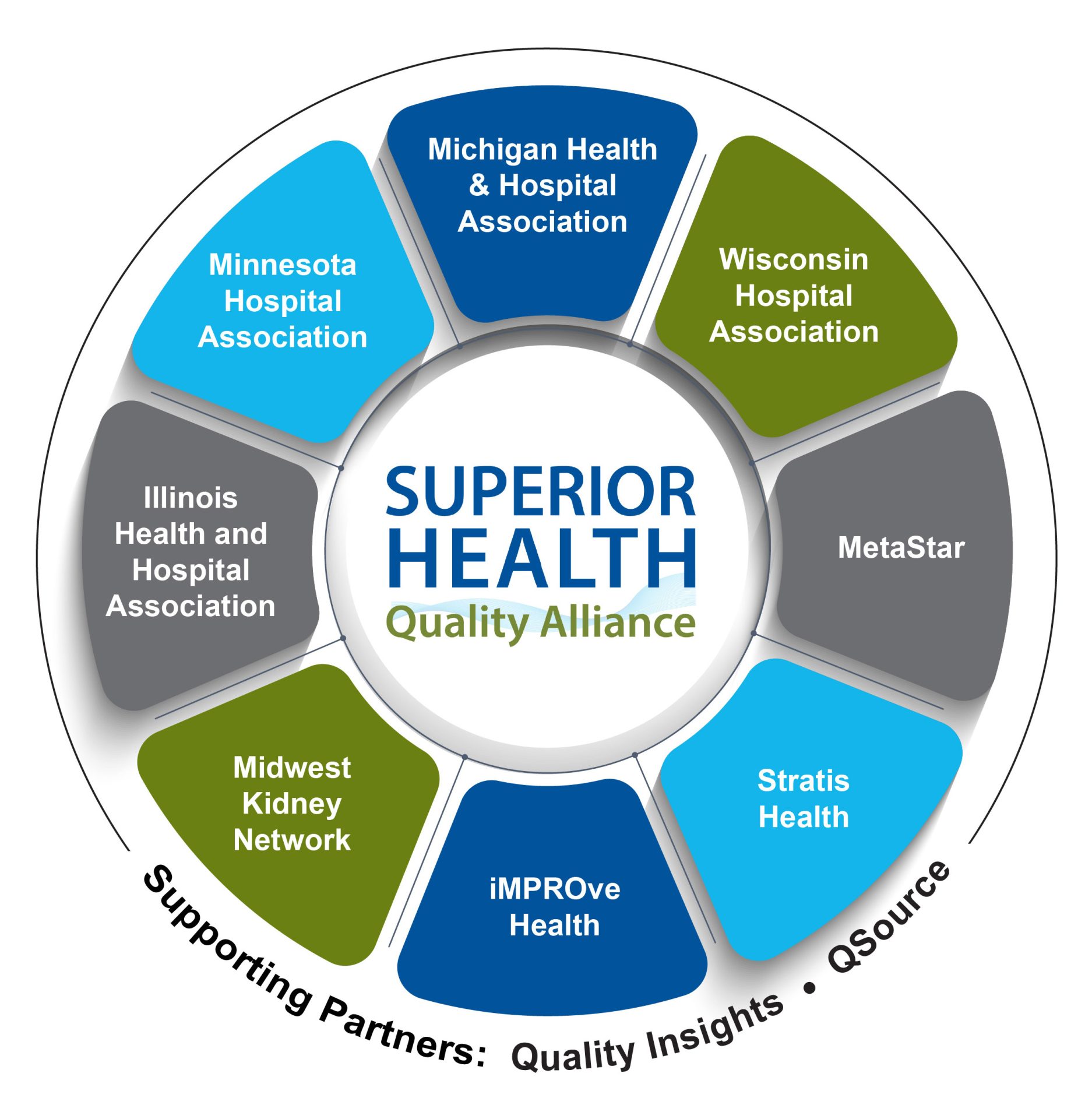 Innovation Network-Quality Improvement Organization (QIN-QIO). QIN-QIOs are organizations that serve as contractors for the Network of Quality Improvement and Innovation Contractors (NQIIC), a Centers for Medicare & Medicaid Services (CMS) initiative. This initiative was designed to provide “healthcare quality improvement services to support quality improvement efforts across settings and programs,” according to the NQIIC.
Rasmussen explained that QIN-QIOs can “collaborate with healthcare organizations to implement strategies that foster lasting cultural shifts and create a more engaged and resilient culture.” Superior Health includes eight organizations from the Great Lakes area who all contribute to the goal of quality healthcare. MetaStar employees like Rasmussen and other staff from the Healthcare Transformation department work as a part of Superior Health. They serve hospital systems, clinics, and nursing homes.
QIN-QIOs like Superior Health help implement targeted quality improvement programs that build on what healthcare organizations are already doing. They work across care settings to improve patient safety and prevent harm through educational programs, training, and written materials. They provide Quality Improvement Advisors to work one-on-one with organizations, offering technical advice to meet that organization’s specific needs. They provide tools and resources to help better manage chronic conditions. They bring together local, state, and regional partners to share ideas for sustainable healthcare improvement. These activities are based on the priorities outlined by CMS, and they all underscore MetaStar’s goal of optimal health for all. And it’s absolutely free for enrolled healthcare organizations in Superior Health’s service area.
The Scope of Work: A Road Map to Quality Healthcare
During CMS’s 12th Scope of Work (12SOW) (January 2019 through December 2024), Superior Health served Wisconsin, Michigan, and Minnesota. Healthcare organizations and their patients in those states benefited from the following projects, a sample of what Superior Health—with MetaStar’s expertise—accomplished:
- Superior Health partnered with healthcare providers to implement the Self-Measured Blood Pressure (SMBP) and ABCS of Heart Health collaboratives.
-
- Our Quality Improvement Advisors trained providers to support patients’ at-home blood pressure monitoring.
- We facilitated the creation of instructional materials that we then distributed to over 900 providers and patients.
- We supported the use of the “ABCS” of heart health: aspirin, blood pressure, cholesterol, and smoking cessation.
- These efforts contributed to a 20% increase in Medicare patients with controlled blood pressure.
- Superior Health partnered with healthcare organizations across Wisconsin, Minnesota, and Michigan to provide mobile vaccination clinics.
- We offered free COVID-19, influenza, and pneumococcal vaccines, reaching underserved areas throughout the region.
-
- These mobile clinics vaccinated approximately 4,000 nursing home staff and residents between November 2023 and November 2024.
- We provided one-on-one technical assistance to nursing homes with low COVID-19 vaccination rates by
- helping them improve vaccination reporting.
- providing on-site support.
- implementing process improvement plans to assess infection control programs.
- developing targeted Quality Assurance and Performance Improvement (QAPI) projects.
- Superior Health Quality Improvement Advisors created toolkits and education modules, such as
-
- Front Line Forces provides quick training on many common and important topics for those on the “front line” of healthcare.
- The SafeClean series is aimed at the environmental service team members. The series covers various methods they can use to help prevent and control the spread of infections in nursing homes.
- Superior Health also created a Resource Library, which includes items like toolkits, educational materials, videos, and more. It includes both clinical and non-clinical topics.
- Superior Health facilitated webinars, affinity groups, and collaboratives to support quality improvement efforts across all healthcare settings.
What’s Ahead for Superior Health
Building off the 12SOW, the 13th Scope of Work (which began in 2025) prioritizes similar focus areas like prevention and chronic disease management, patient safety, behavioral health, care coordination, quality management infrastructure, and advancing health care technology. The overarching goal for Superior Health and MetaStar, however, remains the same. Rasmussen summed it up: “Using evidence-based best practices and data, we can improve the quality of health care and the outcomes for all patients.”
If you are a healthcare organization (hospital, clinic, nursing home, or community care and service) and you would like to receive free quality improvement tools, resources, technical assistance, and more, visit the Superior Health website and click the “Enroll in 13SOW” button to submit your enrollment form today.
Starring…
Aimee Rasmussen is a Healthcare Transformation Program Manager at MetaStar and has been at the company for just over three years. Aimee has leveraged her firsthand experiences with the challenges faced by healthcare providers and consumers to positively impact healthcare quality. She works and collaborates with organizations to help them find achievable, sustainable quality improvement solutions and practices.
Kate Schultz is a freelance writer who formerly worked as a stage manager, high school English teacher, and software tester. She affects healthcare quality by working as a standardized patient for the School of Medicine and Public Health at the University of Wisconsin. Acting as a patient in these scenarios allows her to provide safe practice encounters and real patient feedback for future doctors, PAs, pharmacists, and even veterinarians.